Web Design Services for Small Business: What to Expect and What to Pay
If you're a small business owner shopping for web design services for small business, you've probably already noticed how wide the range of options, promises, and prices can be. One agency quotes you $800, another quotes $12,000 — for what sounds like the same thing. A freelancer on Upwork promises a five-page site in three days. A local Minneapolis studio wants to schedule a discovery call before they'll even talk numbers. Navigating all of it is exhausting, and making the wrong choice can cost you months and thousands of dollars. This guide cuts through the noise and gives you a clear picture of what professional web design actually involves, what fair pricing looks like, and what questions separate agencies worth hiring from ones worth avoiding.
What Web Design Services for Small Business Actually Include
The term "web design" gets used loosely, and that loose usage is responsible for a lot of the confusion small business owners experience when comparing quotes. At a minimum, a legitimate web design engagement should include design (the visual look and layout of your site), development (the actual coding that makes it functional), and launch support (getting the site live and working correctly). Beyond that baseline, services vary considerably.
A quality provider will typically include:
- Discovery and strategy — understanding your business, your customers, and your goals before a single pixel gets designed
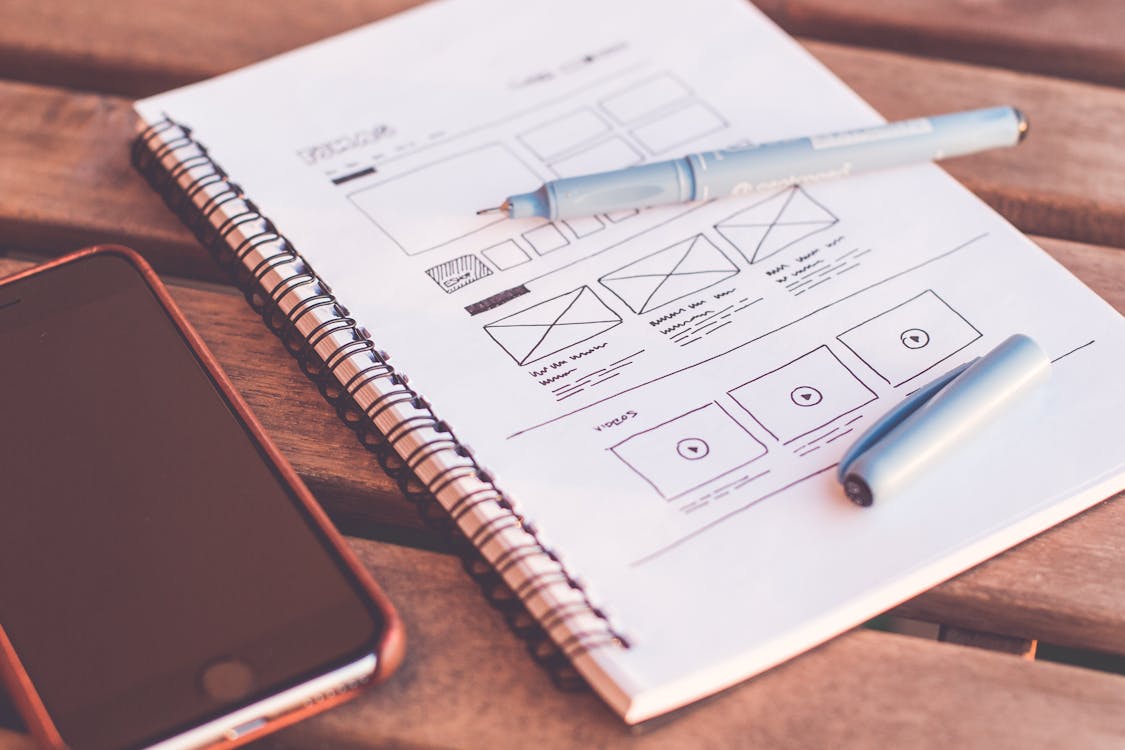
- Sitemap and wireframing — planning the structure and user flow of your site before moving into visual design
- Responsive design — building a site that works properly on phones, tablets, and desktops (more on this below)
- Basic on-page SEO — proper heading structure, meta titles, meta descriptions, image alt text, and page speed optimization
- Content integration — placing your copy, images, and branding into the design
- Testing and QA — checking that everything works across devices and browsers before launch
- Launch and handoff — getting the site live and training you on how to make basic updates
Budget providers — think $300 template jobs or offshore mills — often skip discovery, skip responsive testing, skip SEO, and skip training. You end up with something that looks okay in a screenshot but doesn't perform in the real world.
How to Evaluate Web Design Services for Small Business
Not every agency is a good fit for every business. When you're evaluating providers, you're not just shopping for a deliverable — you're choosing a working relationship that could last years. Here's how to assess whether a provider is worth your time.
Look at their portfolio with a critical eye. Does the work look current and professional? Do the sites they've built load quickly? Do they work on mobile? Click through a few of their client sites on your phone. If they're slow, cramped, or broken on mobile, that tells you everything you need to know about their standards.
Ask about their process. A professional will have a defined process — discovery, design, development, review rounds, launch. If they can't clearly explain how they work, or if they jump straight to "we'll build whatever you want," be cautious. Good web design requires understanding your business before building anything.
Check for local expertise where it matters. For small businesses in Minnesota, working with a local agency or designer carries real advantages. They understand the local market, they're available in your time zone, and they're accountable in a way that offshore providers aren't. That said, local alone isn't a qualifier — a local agency with poor work is still a bad choice.
Ask who owns the site when it's done. Some agencies build your site on proprietary platforms or retain hosting in a way that makes it difficult or expensive to leave. Make sure you'll own your domain, your content, and your site files outright.
Read reviews, and not just the ones on their website. Google reviews, Clutch profiles, and direct references from past clients give you an unfiltered picture of what working with an agency is actually like.

What You Should Expect to Pay
Pricing for web design services for small business in Minneapolis and across Minnesota typically falls into a few tiers, and understanding what each tier delivers helps you set a realistic budget.
$500–$2,000: Template-based or DIY-assisted builds. At this price point, you're generally getting a pre-built theme customized with your colors, logo, and content. The work can be perfectly adequate for a very simple business — a local tradesperson who just needs a basic presence with a phone number and contact form. Don't expect custom design, strategic thinking, or strong SEO foundations.
$2,500–$6,000: Professional small business websites. This is the range where most quality engagements for small businesses fall. You're getting a custom or semi-custom design, a responsive build, proper SEO setup, and a provider who treats your project as a real engagement rather than a template swap. Most five-to-ten page business websites fall here.
$6,000–$15,000+: Custom and complex builds. E-commerce sites, sites with custom functionality, or businesses with significant content libraries and complex user flows typically require this level of investment. This range also covers agencies with senior-level talent, robust discovery processes, and ongoing strategic support.
A few things that affect where your project lands on that spectrum:
- Number of pages and complexity of content
- Whether e-commerce or booking functionality is needed
- Custom photography or copywriting included in scope
- Ongoing support and maintenance agreements
- The experience level and overhead of the provider
Be wary of quotes that seem dramatically lower than these ranges without a clear explanation of what's being cut. Cheap websites are almost always cheap for a reason — and that reason usually surfaces six months after launch.
The Questions Every Small Business Owner Should Ask Before Signing
The right questions reveal far more than any portfolio or sales pitch. Before committing to any web design provider, ask these:
What platform will my site be built on, and why? WordPress, Webflow, Squarespace, Shopify — each has its place, and the right answer depends on your business. A good agency explains the tradeoffs and matches the platform to your needs, not to what's easiest for them to build.
How many rounds of revisions are included? Scope creep is one of the most common sources of conflict in web projects. Knowing upfront how many rounds of feedback are included — and what happens when you need more — protects both parties.
What does the handoff look like? When the project is done, will you receive training? Documentation? Will they walk you through how to update your own site? A confident agency welcomes this conversation. One that doesn't want to answer it may be counting on you staying dependent.
Do you offer ongoing support, and at what cost? Websites need updates — security patches, content changes, plugin maintenance. Understanding what support looks like post-launch helps you plan your true annual cost of ownership.
What does success look like, and how will we measure it? A provider focused on building a site that performs — not just looks good — should be able to speak to goals like lead generation, search visibility, and conversion. If the answer is "a nice-looking website," keep looking.

Why Responsive Design Is Non-Negotiable
No conversation about web design services for small business is complete without addressing responsive web design. More than 60% of web traffic now comes from mobile devices, and Google's search algorithm prioritizes mobile-friendly sites in its rankings. A site that isn't built to adapt to different screen sizes isn't just inconvenient — it's actively hurting your business.
Responsive design means your site's layout, images, navigation, and text all reformat intelligently based on the device being used. A properly responsive site doesn't just shrink — it reorganizes. Navigation becomes a mobile-friendly menu. Images resize without distorting. Text remains readable without zooming. Forms and buttons remain large enough to tap easily.
When evaluating any provider, pull up their portfolio on your phone. Click through the sites they've built. If anything looks cramped, misaligned, or slow, that work represents the standard they'll apply to your project. Don't accept anything less than a genuinely great mobile experience — your customers won't.
For businesses in Minnesota, where winter months drive even more indoor, device-based browsing and local search activity, a poor mobile experience is especially costly. Local searchers looking for services near them are almost universally on phones. If your site fails them in that moment, a competitor's site won't.
Making the Right Choice for Your Business
Hiring a web design service is one of the more meaningful investments a small business can make. A well-built, well-optimized website works for you around the clock — generating leads, building credibility, and converting visitors into customers. A poorly built one does the opposite, quietly undermining your credibility and failing to deliver any return on what you spent.
The right provider for your business isn't necessarily the cheapest, and it isn't necessarily the most expensive. It's the one that understands your goals, communicates clearly, builds to a professional standard, and treats your investment with the seriousness it deserves. Take the time to evaluate portfolios critically, ask the hard questions, and compare not just price but what each price actually includes.
For small business owners in Minneapolis and across Minnesota ready to take that next step, our web design services are built around exactly this philosophy — transparent process, honest pricing, and websites designed to perform. Reach out to the Website Designer MN team when you're ready to talk about what your business needs and what a realistic investment looks like.
Ready to Grow Your Business?
Get a free consultation with our team. No pressure, no commitment.
Get a Free Quote